
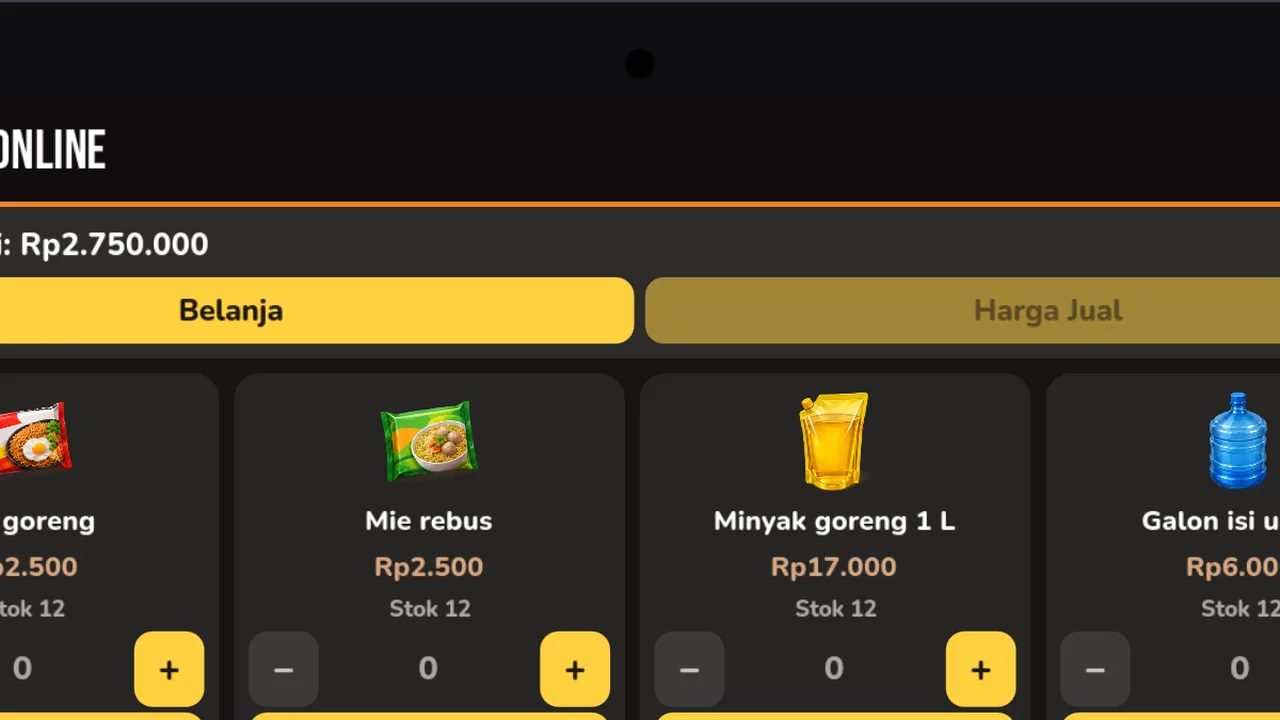

Where the money goes
Every sale adds to the shop money, and every order, upgrade and side job moves it again. get Warung Life Simulator gives the money a story: Pak Misran works to pay for Agus and his university studies, and the shop is how the family gets there.
Treat the cash book as the shop diary. It shows what came in, what went out, and what the shop can afford next. A shopkeeper who reads the book never wonders where the money went.
Earning more without working harder
Earnings grow when the shop serves well: full shelves, fair prices, quick service, good reviews. More customers served well means more sales, and more sales mean more to spend on the shop.
Side jobs add income outside shop hours. Take the ones that fit the day, and let the extra earnings fund the next upgrade instead of the next impulse buy.
The cash book habit
Check the cash book at closing every day, even on good days. Good days hide waste, and the book finds it.
Separate shop money from dreams in your head. The book shows what the shop can afford; wishes do not.
A week of books shows patterns a day cannot: the slow weekday, the busy festival, the good that always sells.
Saving for the big steps
Big upgrades need saved money. Warung Life Simulator Village Guide explains which upgrades earn their keep first, so savings go to the counter, not the decoration.
Keep a reserve always. A reserve covers a slow day, a missed delivery, or a sudden chance to stock a good the village wants. Warung Life Simulator Story covers the backup code that protects the shop itself, not just its money.