

Why prices decide the day
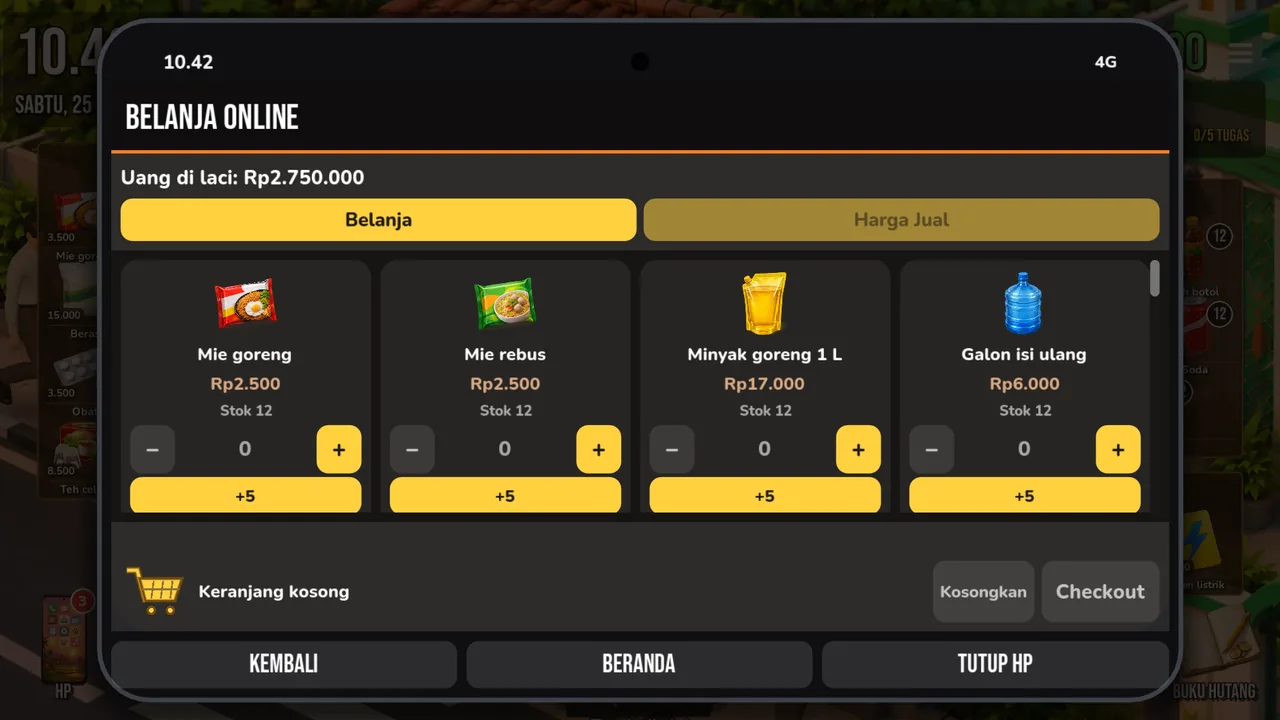
Every good in the shop has a price you set, and every customer judges it. Warung Life Simulator for Android rewards prices that feel fair to the village: goods move, reviews stay strong, and the cash book grows a little every day.
A price is not a guess. It is a decision about who the shop serves. The village buys daily goods often and treats special goods as a treat, so the two groups can carry different prices.
Start near the middle, then adjust
Start a new good near the middle of its range and watch one full day. If it sells out before closing, the price can rise a little. If it sits untouched, the price needs to fall.
Change one price at a time. Changing everything at once hides which change worked, and the shop learns nothing from a busy day.
Prices and the village mood
A price that works on a quiet day can fail on a festival day, when the village buys more and expects fair treatment for it.
Regular customers notice steady prices. A shop that changes prices wildly loses trust faster than it gains coins.
When in doubt, price for the neighbour who buys every day, not the stranger who buys once. Regulars are the business.
Watch the shelf, not just the till
The shelf tells the truth faster than the cash book. Empty space means demand the shop missed; full shelves at closing mean money tied up in goods nobody bought. Warung Life Simulator Stock Guide explains stocking to match what the shelf shows.
Seasonal village life shifts demand. Rainy days, prayer days and festival seasons change what people buy, so revisit prices when the village rhythm changes. Warung Life Simulator Warung Levels covers the village calendar and its effect on trade.